Sunday, March 21, 2021

Why Clinicians Ask For Videos


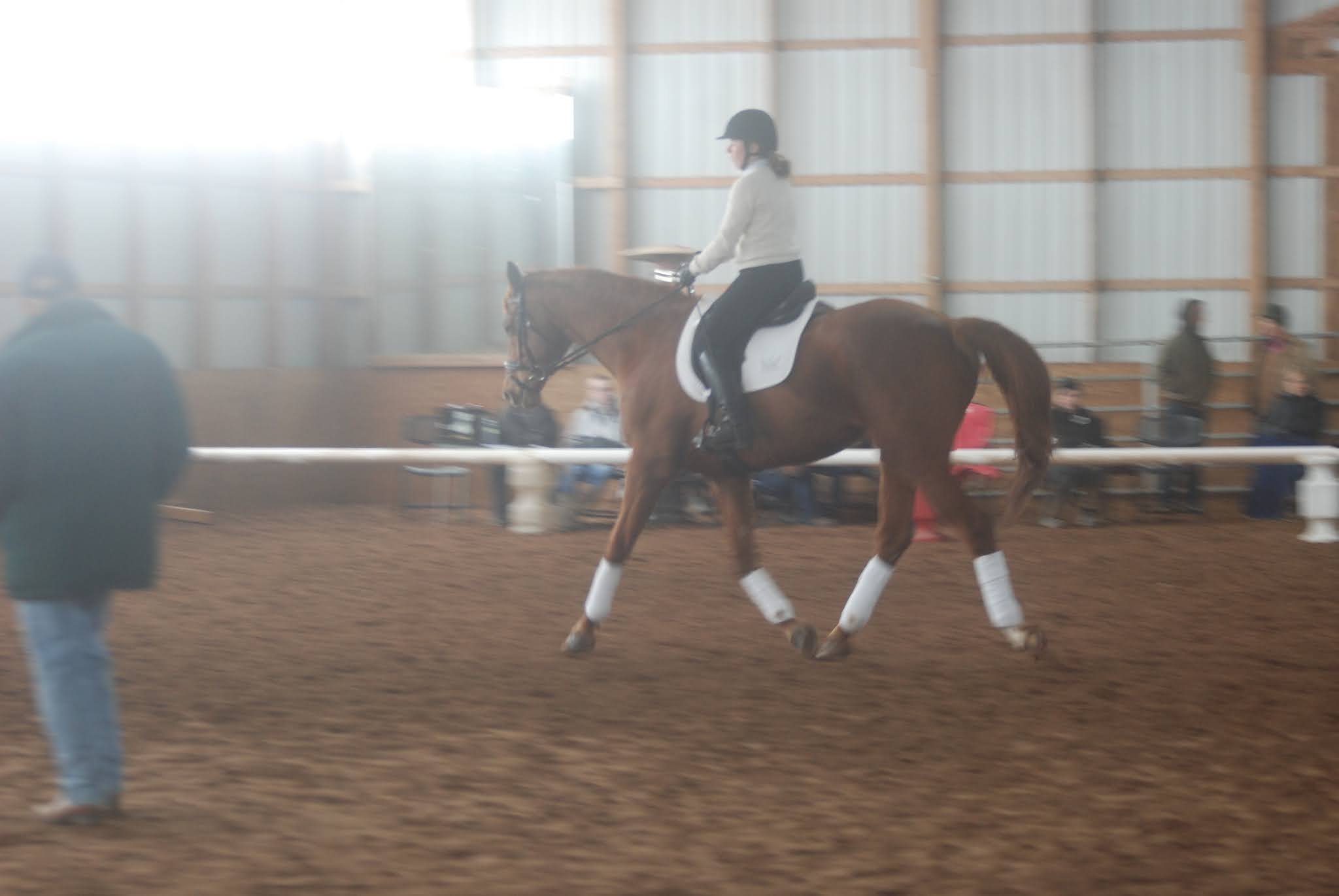
Participation in a clinic can be an expensive enterprise, especially if the clinician is a higher profile equestrian with a proven competition career at advanced levels. Prospective riders that show interest in securing a slot to partake of the event experience are sometimes baffled by why they are asked to send a recent video of a schooling session with their horse, some folks are even offended.

Just why do clinicians request a video before agreeing to teach a rider?


The answer is it's different for everyone. Each clinician has their own set of reasons based on their professional experience, but here are some common reasons for the request:

Is Your Horse Sound? 

It's sad and somewhat amazing to say that sometimes even trainers don't seem to notice, or care to notice, that their student's mount is behaving badly due to a soundness issue.

Unfortunately, the clinician is faced with a difficult situation when this occurs. As horse folks themselves, for clinicians the horse's well-being is always their top priority. When a rider/horse combo enters the arena and the clinician can clearly see that the horse is in discomfort or even pain, the only compassionate thing to do is address the issue, which necessarily sincerely upsets the local trainer and/or the rider. The often anxious, slightly nervous and keen rider has invested financially to participate in the event, and has also expended emotionally with much hard work to prepare for the opportunity to ride in the clinic. No clinician likes to be faced with this issue.

By requesting prospective participating riders that are interested in the clinic submit a recent schooling video, the soundness of the horse can be evaluated. The viewing of the video is not about offering a veterinary opinion, it is about sharing the wealth of knowledge that the clinician probably has on the matter of soundness for task, and giving a 'heads up' to folks that might not be aware of the reason why the horse is not performing to its full potential. This information gives the rider time to have their horse evaluated by a qualified medical professional before the clinic so that issues that may be present can be addressed before the rider commits to a spend on the clinic ride.

It is ultimately the clinician that is responsible for the welfare of the horse and rider in front of them, morally at a minimum and even legally in some States and circumstances. Thus it is understandable that the clinician wishes to see beforehand that the horse and rider are 'good to go.' 


What Benefit Will The Clinic Provide To The Auditors?

Many clinicians have guidelines as to the rider's level of training and their horse's age/level of accomplishment that they require for participation in a select event. This is especially common when a large gathering of auditors is anticipated. 

The idea being that the horse/rider combinations need to be at a stage in their training where corrections and instruction given can be taken on board and executed, to showcase to not just themselves, but also to the paying audience to educate as to how the correct training can quickly progress the horse to a more advanced level. A learning opportunity for all. 

For certain clinicians this can be vanity based, as they do not wish to be presented with a horse and rider they are unable to help improve in front of the public. 


What Benefit Will The Clinic Provide To The Entrant?

If a clinician is offering a specified topic at their event as is often the case, then the horse and rider will only benefit from that particular clinic if they are at a stage in their training where they are ready both physically and mentally to advance.

For example, if a jumping clinician is offering a clinic to aid riders deal with jumping a course of spread fences/oxers or water jumps, there is little point in a novice rider/horse combo showing up. Similarly a dressage clinician that is offering a clinic on collection and lateral work will not be able to instruct a rider on this topic if they don't have an independent seat and their horse has not attained the prerequisites of basic dressage.

A first hand view of a video ride will allow the clinician to evaluate whether horse and/or rider will benefit and are ready for what is intended to be taught at the event.

As a rider paying good money for help from an expert in their chosen discipline, this is surely an advantage? If the clinician does not feel that you are ready for the work or if your horse is not at the level of training to address the requests that would be made of it, surely it is better to know before you get in the ring?

Take Home Message

Don't be offended if a clinician requests a video before slotting you into a clinic. It does not mean they are not offering to teach all that want to participate, especially if it is an open clinic with no topic specified. It just means they want to be sure horse and rider are fit for the task.

If the clinic is specifically geared to a certain level of training or if the event is more a symposium than a clinic, then expect that the horse/rider will need to submit a short video of themselves at work, so that their talents can be evaluated as far as readiness for the task they will be addressing training wise.

Everyone, including the barn host, local trainer, riders and clinician should want the best possible experience for the participating riders and their horses. 

Unfortunately many trainers make plenty of pre-clinic prep lesson money from their students and can sometimes be blind to the fact they are over-schooling or pushing the horse, even to the point that the sudden increase in work can cause a previously sound horse to become sore and resistant. 

This is an inconvenient truth that experienced clinicians see all too often. Hence the requirement for video submission is more commonly requested by the experienced clinicians than those just starting out in their careers.


Saturday, March 6, 2021

The Best Therapists Eat Grass ~ But Give Them Some Peace Too

Photo Credit: Nikki Alvin-Smith Studio


Whatever life throws at you, and let's face it during the last 15 months that has been a lot for all of us, there have to more options than 'suck it up' and deal with it. The time has been especially difficult for women in the workforce as they do double duty with home schooling kids and lay offs at work or working weird hours from home.

Our kids are stressed out. Youngsters toil with remote learning, our adult kids fight to keep their jobs and income and if they have a family, their sanity. Grandparents find themselves babysitting the grandkids as useful adjuncts to the daily life of their children and find it hard to go back to work even as the job market opens up once more.

For equestrians horses have become more important than ever in their lives in their role of emotional support. The perfect therapist! Plenty of hugs and interaction, no backchat, no noise. Just a peaceful coexistence with joyful time spent outdoors exercising during schooling time or the incomparable calm companionship of just hanging out in the stall grooming and spending time together.

It's no wonder that more and more folks are bringing their horses home to their backyard if they have the option. Sharing the equestrian passion with other members of the household can offer valuable stress relief to everyone.

What do the horses think of all this attention? From their POV I'd expect quite a lot. Boarding barn owners report that their human clients are spending more quality time with their equines and building better partnerships. Horses love attention and having something to do. Freedom to roam and move about being essential to their mental and physical health just as it is for ours.

But is it possible to overdo all that attention to your equine therapist? The answer is yes. Horses can become just as stressed by too much input as by too little. Obviously it all goes to the nature of the beast and the relationship that is currently enjoyed. Trust is essential in this emotional equation, as a horse that is distrustful of its caregiver or rider will become undone quickly with ever more time spent in the presence of the tension-inducing homo sapiens species. Homo sapiens, (Latin: “wise man”) being the species to which all modern human beings belong. But perhaps sometimes not all that wise.


It is important not to forget to give your horse his downtime and to establish a routine that works for both sides of the partnership. For example, rowdy kids climbing up and down all day on a pony can easily turn a respectful trustworthy critter into a cantankerous beast. 

It's also not fair to suddenly decide to increase the riding time just because you have more free time available. A horse needs to be 'legged up' gradually and new demands must be made with a clear understanding from the horse of what is being asked and how to answer the requests.

A horse may become lame out of seemingly nowhere. It may be possible to get away with a once a week one hour ride on a badly fitted saddle that works well for neither horse or rider (so often heavier riders sit in saddles far too small for their posterior). But when you start riding for longer periods or more frequently the pain may be unbearable and cause behavioral and soundness issues. A horse simply cannot be expected to 'suck it up' and manage any more than the rider should be asked to do. 

So give some thought to your trusty steed and their needs and as always, place them well in front of your own. Our noble beasts deserve our very best efforts and we must not take too much even though equines will so often give so much more than we should ask.


Sunday, January 31, 2021

The Broad Reach of Catskill Horse Expands

 The Merry Band at the Catskill Horse have worked hard for several years now to grow the magazine and it has steadily harvested a larger readership reach over the period. We are on course to continue to expand under the umbrella of our parent company, Horse in a Kilt Media, Inc.


We are very pleased to announce that the unique monthly viewership has now topped 90,000! Not bad for an all volunteer, community publication.

Not only has our viewership increased exponentially, our reach has also gained geographic ground. New York State as a whole is saturated with a heavy rain of return readership, but Catskill Magazine is also seeing the visitor numbers climb across all neighboring states especially in the NE and also SC, NC, and FL.

Coming soon is the launch a new equestrian magazine, also an imprint of our parent company, Horse in a Kilt Media,Inc., - that will address this broadband interest with a different format altogether.We can't wait to welcome our sister magazine to the fold. Pun intended. Stay tuned!

Meantime we will continue our mission to be a super resource for all things horse, and work even harder to develop captivating content and offer meaningful equestrian advice from savvy sources. 

The Merry Band at the Catskill Horse couldn't produce this magazine without the support of CH wonderful advertisers. Please support them in return, and let them know you saw them here!

Meantime, if you have a penchant for writing and would like to contribute to our magazine please don't be shy to reach out. Guest bloggers, feature articles and event coverage are all options for you to shine with a byline. Simply email Editor@CatskillHorse.org with your submission ideas/content.

As vaccine rollout becomes a reality we are hoping the 2021 events season will be active, so if you would like a free listing please send us the info! Our valuable .org backlink can really boost your organics under the 2021 Google core analytics. Deets here.. 

Meantime stay safe and stay warm! 


Tuesday, December 1, 2020

Is It Just Me? Or is everyone else itching to get back to clinics and competition?

A Personal note from Editor/Catskill Horse magazine, Nikki Alvin-Smith


 I do confess that I cannot wait to get back to giving dressage clinics, coaching at competition and offering dressage training at our farm here in Stamford, New York.

Everyone has endured a very turbulent and strange 2020 and as we canter into the last month of the year I cannot but hope that next year things return to some semblance of normalcy. 


For my husband and I, both international level Grand Prix dressage competitors/coaches/clinicians, the year has been a very quiet one. Our decision was to postpone our busy clinic tour, including trips abroad as there was no way the necessary quarantine needs could be met once there - and the idea of masking up to give instruction for 10 hours straight a day was an impossible ask. 

We LOVE our clients and missed the hugs, conversations, and frankly income, that our horse business provides. But, patience will hopefully pay off in the long term with a return to good health and better times.

Our life probably mirrors that of many other trainers. A mix of clinic giving, boarding/training, travel and ongoing personal education with other colleagues.

Here's a snapshot of ours:


Hubbie Paul coaching an accomplished hunter jumper rider.

Paul at a Finger Lakes clinic training Kim Preston - a dressage trainer in her own right.

Kim Preston visiting on site at our farm for a few days dressage retreat.

Another hunter/jumper rider gets some help on the flat.

Young Riders are all part of the action.


As we look forward to getting back to giving clinics we also look forward to welcoming boarders back that seek dressage training for their horses. 

 Once again being Covid careful we halted on site visits and training for others at our farm for 2020. It just seemed the right thing to do. But in Spring 2021, as vaccines hopefully become widely administered and the pandemic crisis abates, we expect to be back to full training at our farm.


Paul training ANCCE stallion Celesto V at WVH.


 We also look forward to training time with our own horses of course. We have sold off all our breeding stock but we have kept two special horses in our private yard, a 3 year old Lusitano/DWB homebred gelding called Extravaganza WVH and this beautiful soul, Tiberio Lafite aka Tigger, who we have owned since a youngster and is now 26 years old and still going strong. Though his Grand Prix moves are not requested anymore!! 


Travels abroad should also be back in play (we fervently hope!) as the year of 2021 progresses. We sure miss our friends, family and clientele abroad. The opportunity to take in some ongoing education from some of the world's best trainers is always a treat.


Paul and Stal Andre outside Lisbon, schooling on the great late Lusitano stallion Rico - as Portuguese dressage master Antonio Borba looks on at his retired stallion go.    


Certainly all of us wish to be back at it all and busy with our chosen career paths. It is a great time to set plans in motion, to dust off any depression, and encourage our hearts and minds with positivity towards the future.

So don't be shy to get on it! The winter in the NE is the perfect opportunity to set the hooves in motion for 2021 and canter down the centerline in an optimistic frame of mind.

Don't forget to send news of your forthcoming shows/clinics and other horsey events to Catskill Horse magazine for free inclusion on their events page.


Tuesday, October 6, 2020

Buying Horse Hay? Beware of Scammers...

 As Fall is in full swing and winter rapidly approaches horse owner's thoughts turn to stocking up on hay supplies. It seems there are an abundance of scams ongoing, some new and all nefarious and many occur through social media entities such as Facebook, where folks seeking hay are 'trolled' and captured.


Here are a few tips as to what to look out for so your hard earned dollars don't disappear without quality hay 'on your table' and red flags to be aware about when resourcing a supplier.

  • Know your supplier. Do your due diligence when it comes to buying hay. Obviously there are many reputable hay dealers around, but there are also many that are not and many middlemen that act in concert with certain hay dealers procuring hay supplies and customers for a commission that actually produce no hay at all themselves, or very little. It is smart to know the provenance of your hay if possible, and deal directly with the actual producer of the hay. Dealers necessarily source hay from all over the place and quality can vary considerably. At a minimum a hay seller should have a website, and a decent and transparent online presence. Be aware that middlemen often use other people's photos of hay stacks and claim them as their own, when really they have no such production or supply on hand.
  • Don't pay in advance. The latest trend of taking/requesting 'bookings' and requiring a deposit or prepayment is a great way for dealers to garner cash from prospective customers to provide cash flow to their business. How do you know you will even see the hay? There have been recent arrests ( finally) of a person in VT that regularly took money from unsuspecting horse owners for loads of hay in advance of delivery for many years, and never turned up with any hay supply. If you prepay you also have no idea what quality will be provided or when it will arrive. Pay on delivery.
  • Check the load. Dealers may tail load with good hay, so that on initial inspection the load looks good and you say go ahead and unload it. Halfway through the load may be a different quality from a different source. Check it throughout and ask the dealer if the hay has all come from the same producer.
  • Watch out online. There are many folks that pose as prospective consumers or direct growers when really they are middlemen looking to either pick up a load and add their margin, or are resourcing prospective customers for larger hay dealers. Larger hay dealers may even drop a trailer at one of their 'sales agents' and ask them to fill it by finding a source of hay, and then call on it when they get a call for someone in the area needing a hay supply. Thus your hay may have sat in a metal tin for a while before you see it. Not good for the hay!
  • Stay loyal. When you find a good resource to buy hay stick with it. Understand that prices may nominally increase year to year as all farmers' experience cost increases annually in producing the hay. Insurance, fuel, equipment leasing, buying and maintenance, costs to fertilize fields either organically or with chemicals, re-seeding of fields etc. 
  • If you are looking for horse quality hay, buy from someone who knows horses and what their needs are. Properly cured horse hay, grown for horses without weeds i.e. clean and green, will cost more than cow hay.


Sadly there are many unscrupulous people out there. Be smart, do your homework, call and ask questions, Google them, review websites and social media posts. 

Don't part with your cash until you have seen the hay in person and are happy with it!


Sunday, September 27, 2020

When Equestrian Press Calls Out

The stand Eventing Nation {EN} recently took regarding their contention and action to have the name of the event Plantation Field removed from the competition due to its claimed offensive undertones, made the national news cycle including the NY Times. Contentious rhetoric and actions ensued. 

The owner of the property pulled the lease rather than change the name of the event, which has been on the calendar as a recognized competition for 20 years; Olympic rider Boyd Martin, requested publicly that his image and name be removed from any press at the publication; other publications brandished their swords alongside EN and the equestrian populace came out to voice either their support or boycott of EN and its owner brand and advertisers. 

So in theory September 2020 was the last time equestrians will be invited to gallop along at this fixture, at least as it is now called.

The pulling of media credentials from Eventing Nation's Editor by the competition's management, as a result of the publication's article, was not the first time access has been denied at an event to press as punishment for speaking out and certainly it will not be the last. 


I have personally experienced similar access issues to eventing competitions, although in my case for no apparent reason. The property owner that hosted a major cross-country event that cancelled recently after a good run in Dutchess County was extremely hesitant to allow me to cover the competition for this magazine, Catskill Horse. In that case the statement 'came down' to me that I would be allowed to cover the event provided I kept a low profile and did not publish anything negative about the sport of eventing or the competition. I did not attend.

I am not going to delve into the wrongs or rights or moral grounds for the Plantation Field controversy, except to say it could have been better handled better by all parties. The timing of the article and the way the conversation was approached was certainly designed for maximum impact.

I do believe that elitism in equestrian sport, whether perceived or actual, needs to go and that governing entities need to do a better job of developing an inclusive environment for everyone. 

In my opinion the boycott of a publication or company for its views is somewhat inevitable, as in my experience people like to read and hear thoughts and ideas they agree with better than those that challenge their mindsets. That is human nature I suppose. It is a sad reality though. How can we improve life for all when we are afraid to think no further than our own frame of reference and education.

Of course as a publisher and a writer I believe free press is critically important to society and that voicing an opinion or bringing to light options for improving life for all is an essential component of a media professional's job. It was the driving force that guided me to start writing professionally back in 1981, covering events for The Chronicle of The Horse and penning 'how to' articles for the now defunct, Dressage and CT. 


I also fervently believe that facts should be the guiding principle in all writing, not under researched or ill-informed and errant statements used to promote ignorance or create tensions or unrest.

Media professionals will always be the subject of retaliation. Sometimes petty instances and histrionics but sometimes severe consequences can follow publication of their works.

For event management press is usually highly sought and much desired. It boosts not just the entries and attendance at a competition, it also brings much needed numbers of 'eyes' on the valuable sponsors participation that most venues require to operate. Event planners, hosts and management work hard to bring equestrian competitions to the public eye and try endlessly to support the sport to keep it on the Olympic calendar. Their task is not an easy one by any means.


The expression, " All press is good press," is something to think about. I am a PR/Marketing Specialist and in my experience for smaller brands this is the case. For larger brands perhaps not so much. Glean.info covers this topic beautifully. For equestrian events, in particular the dangerous sport of combined training, press can cast an unwanted spotlight on issues with death and disasters on course. Reticence to allow open press access to events held on private property is understandable if the event management team is concerned about a journalist highlighting a negative aspect of the competition, even if it is factual and accurately illuminated.

The name of a venue is a challenging thing to adapt, not least because of the historical factor that may be inherent in the place name. Whether that name be perceived as a negative or positive attribute is a societal moral issue. 

One thing is certain, the freedom of the press to report and do their job is an essential part of the conversation. However, the author must be certain of their facts before they hit send and the topic could have easily been discussed as Boyd Martin's official press suggested, "over a cup of coffee," and after the event had concluded, not just in advance of its date.

Photo Credits: Nikki Alvin-Smith

Tuesday, July 28, 2020

Hey! Need hay? Update on Horse Haymaking for 2020


1st cut 2020 hay - Photo Courtesy of Willowview Hill Farm, Stamford NY.


Farmers are busy baling hay and closing out their 1st cut 2020 season. The weather has been difficult this year and yields are down for 3 reasons:

  1. The late start to Spring weather and lack of snow cover over winter dished out a slow start to the growing season for all types of hay.
  2. The lack of Spring rains cut down on the yield.
  3. The good weather had farmers taking advantage of the opportunity to get busy knocking down hay earlier than usual so many of us saw a lower yield.
What does this mean to the consumer looking for 2020 1st cut hay?

Yields being down 30-40% in some cases mean hay prices have seen an increase according to the USDA.

The hay available is of very good quality in general, as most farmers did cut earlier so the seed heads are still on the grasses and the stems soft. The drier weather also helped hay producers avoid rained out haycrops on the field in the NE USA so the nutritional quality should be higher.

The earlier hay cutting opportunity also means many cow farmers are taking advantage of a midsummer 2nd cutting for silage and will take their usual 2nd cut as a 3rd cut later in the season. This may mean the horse hay available on their second baling will come in later and may suffer from curing issues with the hay lessening quality if pushed too late into the Fall. 

When less 1st cut is available customers will be forced into buying more expensive 2nd cut that is around. Either way - 1st cut may be harder to come by if you don't stock up with enough for winter and have to start searching high and low for it in the Spring. 

Rainfall in July in the North-East has not been significant so we wait and see how yield on the 2nd crop comes in. 

Photo Courtesy: Willowview Hill Farm, Stamford, NY

All in all it would be smart as a consumer in need of horse hay supplies, to stock up sooner rather than later to ensure supply needs can be met and hay costs are kept under control.

Tip: If you choose to buy large rounds or squares consider buying an equine hay feeder as they can save you up to 30% on hay costs according to University of Minnesota research.


Photo Courtesy of Horizon Structures LLC, Atglen, PA