Tuesday, August 31, 2021

A .org Link Benefits Your Business ~ But They Are Hard to Secure

An established .org business such as the community resource magazine that is Catskill Horse, offers business owners a valuable lift in organic searches to help grow their company profile in the competitive net neutral marketplace.


Most .org domains are non-profit entities, or government owned sites, that are hard to access for backlinks. No two way street as it were. Adding a .org as a link from a site to a .org business adds little value when it comes to SEO.

Catskill Horse offers an enterprising means to not just get your business in front of a large marketplace of regular viewers ( currently over 100K+ per month), it also elevates your website in the organic searches and it is relatively inexpensive to accomplish.

Best way to garner the full benefit is to take a long term or annual contract with a 12x month frequency and take advantage of event feature articles and editorial support with an advertisement. But there are other options too.

In addition to more than 15 horse business categories listed in our Directory Service Guide listings:


 Plus a special section for stallion owners:


And a special section for equine art:


 Look at the categories your non horse-related business can be included under:


" We have special promotional rate offers that run seasonally for 3 month blocks to help folks manage their budget," explains Catskill Horse magazine Editor Nikki Alvin-Smith, " The rates start at just $195.00 so it is a super opportunity for biz owners to improve their branding and sales reach. As always our magazine is here to help grow the community."

While Nikki Alvin-Smith contributes her services to Catskill Horse magazine as part of a community service effort, her 'daily driver' job is as a professional PR/Marketing Specialist/Strategist and Content Writer. Thus her experience helping companies grow their brand and increase their sales and profits provides additional insights that advertisers that support Catskill Horse magazine can utilize to their advantage.

Nikki Alvin-Smith at Dalhousie Castle Library, Scotland


"I write a lot about SMM and SEO. As I call them when writing my column pieces for Nikki's Notes, the two gangsters of marketing. It surprises me how many astute entrepreneurs and even seasoned business managers don't know how to adapt their marketing to address the ever changing Google analytics. It's worthwhile for anybody that is serious about gaining market share to keep abreast of what's hot and what's not."

Listings on the Directory and on the pages is FREE for businesses and details of what information to submit are found on each page. Ask about the current promotions and planned extra bonus features that are coming to Catskill Horse and harness the power of the press to your advantage. 

While a paid advertisement is necessary to garner the valuable .org link to a website, there are other options such as feature articles that focus on the business, event wrap up news features, social media promotion through Catskill Horse various media channels, event coverage and much more. Advertisement design is free.

" Not only is a paid advertisement at Catskill Horse magazine a great way to grow your brand, and improve your sales, it also helps the community at large by keeping the magazine funded. The viewership of the magazine is non-subscription based and free to read. It is a business model that has been employed primarily to help connect horse related companies in the area and promote rural lifestyle. When it was founded 9 years ago, the reach was expected to be mostly regional across the Southern Tier and Mohawk Valley of New York. However, it has grown massively since inception. We have a lot of readership up and down the East Coast, with out of town folks connecting to find places to stay, eat and come enjoy some time Upstate, enjoying all the beauty it has to offer. A lot of NYC folks enjoy reading it and use it as a resource. It has grown to be about horses and rural lifestyle and agri-tourism," states Nikki.

Are you part of "The Merry Band" that is the Catskill Horse? You're invited! Don't be shy to connect.

Please visit www.CatskillHorse.org to learn more.

Tuesday, July 20, 2021

The 2021 Hay Season Rained Out

Labor intensive small square bales at a premium
 

2021 has been a year of tremendous variance in haymaking weather for many hay farmers across the country. While the West has ridiculously hot weather, fires and parched ground, the North-East began the hay season with good weather and everything looked perfect for a great hay season.

In the Mid-Atlantic States the heavy rains in Spring brought on growth but also caused mildew issues with Bermuda grass types, leaving the Carolinas with less quality in their May cut. While in the North-East the farmers who dutifully watched the weather and started cutting as soon as the weather settled were rewarded with good quality harvests and slightly above average yields for the most part. But then the rains came and many farmers in the North-East and Eastern Canada were cut short in the 1st cut harvesting program. 

Organic horse hay at Willowview Hill Farm, Stamford, NY


In some North-Eastern USA regions, the daily rainfall totals have been so high and so overwhelming with their persistence, that the fields are too wet to even contemplate working at the present time. Yet, rather unusually, in certain areas such as Northern Maine and Northern New Hampshire and Northern Vermont, drought conditions have left fields of parched crop as their Spring rains never showed up.

Where rain persisted, many farmers opted to take the planned 1st cut dry hay as a silage cut, in order to hopefully maintain a decent 2nd cut yield later in the year. Due to the drought issue in Northern NE areas, hay producers in Upstate New York and Eastern Ohio are busy supplying their colleagues in those regions.

Meantime, hay commodity futures continue to escalate, as many of the usual hay producing States out West such as Idaho, as well as Northern PA, New York and New England report shortages are expected. Export hay prices are also increasing, with export levels above last year's numbers for the same period.

Top quality or premium horse hay production will obviously be negatively affected by the wet weather issues. If they have been harvested there is a likelihood knocked down hay will have at some point in time been rained upon, that necessarily lessens the nutritional value of the cut. Damaged crop may be mulched back or baled in large rounds/squares for use and sale to the cattle or general livestock market and miss the horse market altogether.

Even if the hay available is 1st cut, expect these later 1st cut supplies to be at a higher price than those available earlier in the year as a result of the high demand. Late cut 1st hay often means a lack of 2nd cut hay too, as the grasses have not had time to grow. The outcome of 2nd cut yield and quality will depend of course on the amount of rain and temperatures.

Given all the above it is a good idea to stock your barn with hay supplies sooner rather than later, or be prepared to pay higher prices again this year. Diesel prices are of course significantly higher than 2020 and many farmers are still reeling from last year's drought and lack of hay revenue as a result and have barely managed to stay financially afloat. Many having to buy in hay supplies for their own livestock instead of supplying their own.

Current prices that dealers are paying for small square 1st cut horse hay bales of premium quality in Upstate NY range from $6-$8 bale. Dealers are already scooping up supplies, having learned the lessons of last year in the supply chain. While certain areas such as Long Island, NY, NJ, PA, and the entire North-East are paying much higher prices. Some retailers paying as much as $13-14 for a small square of good quality product.

As for the availability and pricing of 2nd cut - expect that to be elevated and talk to your suppliers early. Consider buying hay out of the wagons/off the field to secure supply.


Saturday, June 26, 2021

The Horse Show Season Is In Full Swing ~ Are You Dancing?

There is much to celebrate this summer as we see the Covid restrictions lifted in New York and the horse show event calendar fill up with neat offerings. 

The uncertainty of how many riders are keen to return to competition haunts every show organizer and has done for months, but based on the events ongoing it appears that just like the pent up demand for dining has restaurants busier than ever, show entries are overflowing the digital sign up software bin.

File Your Entries Early.. Jump To It!


Whatever the discipline all tracks lead to a bumper year for entries and competitions need to add more rings, classes and dates to ensure they cash in on the demand.

A huge thorn in the sides of organizers is the one of lack of volunteers. Folks are simply so busy getting back to family vacations and gatherings, graduations and travel opportunities that signing on for arduous days as a volunteer are not high on their priority list.

Most riders are anxious to make up for lost time with their competition schedules and get their horses dancing in the ring. Perhaps you are one of them. The reality is you'd better get your foot in the stirrup early and get your entries in, because if you want to play you most certainly will have to pay more than ever for the experience. Event costs have surged since Covid, and the demand for venues and dates, vendors and volunteers have set a keen competition world alight of their own.

You don't need to have a degree in rocket science to have figured out this was coming when you think about it. Organizers claiming the climbing numbers of entries as 'inexplicable' are simply out of touch with what clinicians, coaches and competitors have been saying for the past 12 months, " We want in!"


Swinging into summer..


As a competitor if you know you are going to scratch a competition or class, be kind to your fellow equestrians and do it as early as possible. The waiting lists are long and the demand shows no sign of abating. We all want to help our event organizers map their course. Let's show up, sign up and sign out on schedule.


Sunday, March 21, 2021

Why Clinicians Ask For Videos


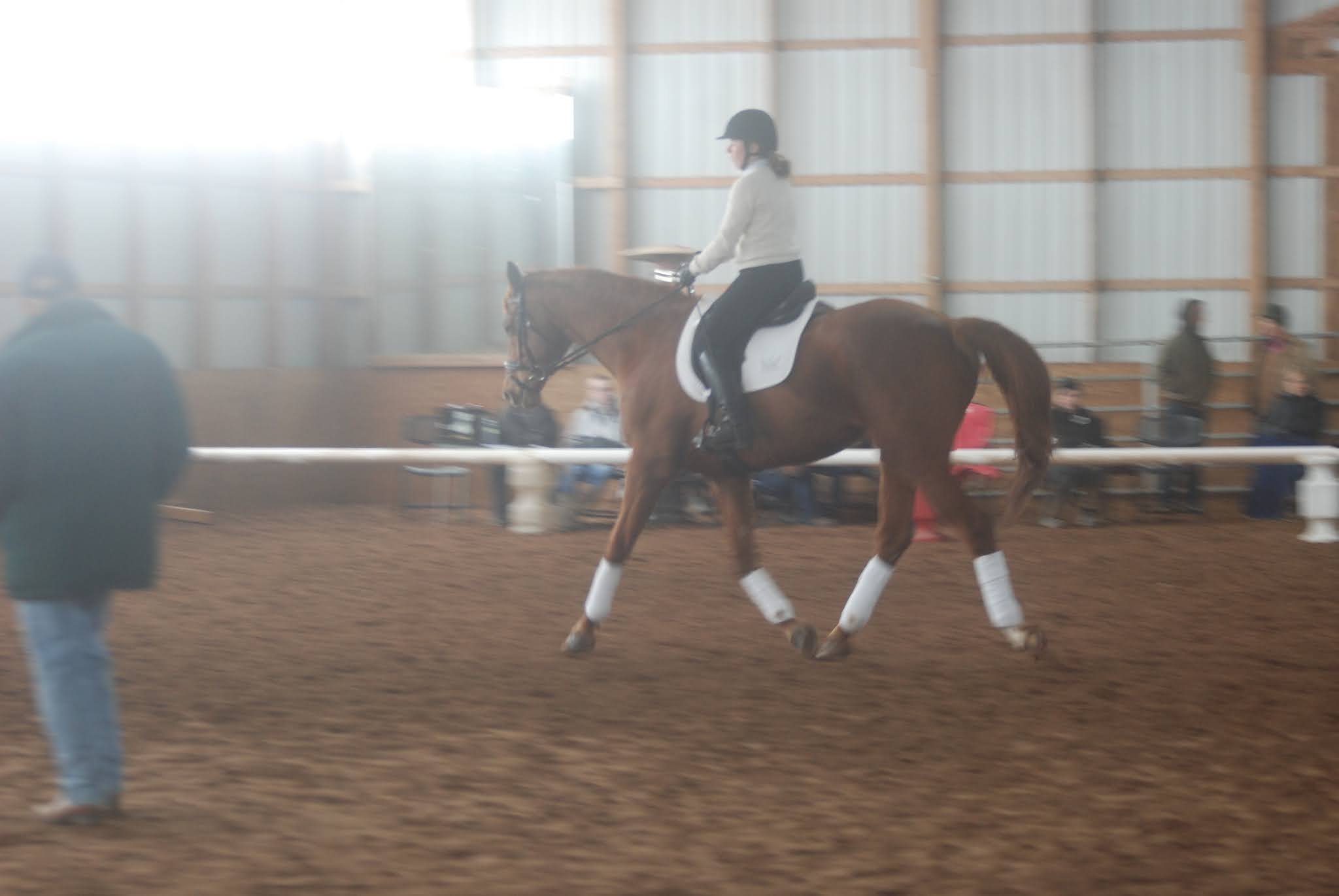
Participation in a clinic can be an expensive enterprise, especially if the clinician is a higher profile equestrian with a proven competition career at advanced levels. Prospective riders that show interest in securing a slot to partake of the event experience are sometimes baffled by why they are asked to send a recent video of a schooling session with their horse, some folks are even offended.

Just why do clinicians request a video before agreeing to teach a rider?


The answer is it's different for everyone. Each clinician has their own set of reasons based on their professional experience, but here are some common reasons for the request:

Is Your Horse Sound? 

It's sad and somewhat amazing to say that sometimes even trainers don't seem to notice, or care to notice, that their student's mount is behaving badly due to a soundness issue.

Unfortunately, the clinician is faced with a difficult situation when this occurs. As horse folks themselves, for clinicians the horse's well-being is always their top priority. When a rider/horse combo enters the arena and the clinician can clearly see that the horse is in discomfort or even pain, the only compassionate thing to do is address the issue, which necessarily sincerely upsets the local trainer and/or the rider. The often anxious, slightly nervous and keen rider has invested financially to participate in the event, and has also expended emotionally with much hard work to prepare for the opportunity to ride in the clinic. No clinician likes to be faced with this issue.

By requesting prospective participating riders that are interested in the clinic submit a recent schooling video, the soundness of the horse can be evaluated. The viewing of the video is not about offering a veterinary opinion, it is about sharing the wealth of knowledge that the clinician probably has on the matter of soundness for task, and giving a 'heads up' to folks that might not be aware of the reason why the horse is not performing to its full potential. This information gives the rider time to have their horse evaluated by a qualified medical professional before the clinic so that issues that may be present can be addressed before the rider commits to a spend on the clinic ride.

It is ultimately the clinician that is responsible for the welfare of the horse and rider in front of them, morally at a minimum and even legally in some States and circumstances. Thus it is understandable that the clinician wishes to see beforehand that the horse and rider are 'good to go.' 


What Benefit Will The Clinic Provide To The Auditors?

Many clinicians have guidelines as to the rider's level of training and their horse's age/level of accomplishment that they require for participation in a select event. This is especially common when a large gathering of auditors is anticipated. 

The idea being that the horse/rider combinations need to be at a stage in their training where corrections and instruction given can be taken on board and executed, to showcase to not just themselves, but also to the paying audience to educate as to how the correct training can quickly progress the horse to a more advanced level. A learning opportunity for all. 

For certain clinicians this can be vanity based, as they do not wish to be presented with a horse and rider they are unable to help improve in front of the public. 


What Benefit Will The Clinic Provide To The Entrant?

If a clinician is offering a specified topic at their event as is often the case, then the horse and rider will only benefit from that particular clinic if they are at a stage in their training where they are ready both physically and mentally to advance.

For example, if a jumping clinician is offering a clinic to aid riders deal with jumping a course of spread fences/oxers or water jumps, there is little point in a novice rider/horse combo showing up. Similarly a dressage clinician that is offering a clinic on collection and lateral work will not be able to instruct a rider on this topic if they don't have an independent seat and their horse has not attained the prerequisites of basic dressage.

A first hand view of a video ride will allow the clinician to evaluate whether horse and/or rider will benefit and are ready for what is intended to be taught at the event.

As a rider paying good money for help from an expert in their chosen discipline, this is surely an advantage? If the clinician does not feel that you are ready for the work or if your horse is not at the level of training to address the requests that would be made of it, surely it is better to know before you get in the ring?

Take Home Message

Don't be offended if a clinician requests a video before slotting you into a clinic. It does not mean they are not offering to teach all that want to participate, especially if it is an open clinic with no topic specified. It just means they want to be sure horse and rider are fit for the task.

If the clinic is specifically geared to a certain level of training or if the event is more a symposium than a clinic, then expect that the horse/rider will need to submit a short video of themselves at work, so that their talents can be evaluated as far as readiness for the task they will be addressing training wise.

Everyone, including the barn host, local trainer, riders and clinician should want the best possible experience for the participating riders and their horses. 

Unfortunately many trainers make plenty of pre-clinic prep lesson money from their students and can sometimes be blind to the fact they are over-schooling or pushing the horse, even to the point that the sudden increase in work can cause a previously sound horse to become sore and resistant. 

This is an inconvenient truth that experienced clinicians see all too often. Hence the requirement for video submission is more commonly requested by the experienced clinicians than those just starting out in their careers.


Saturday, March 6, 2021

The Best Therapists Eat Grass ~ But Give Them Some Peace Too

Photo Credit: Nikki Alvin-Smith Studio


Whatever life throws at you, and let's face it during the last 15 months that has been a lot for all of us, there have to more options than 'suck it up' and deal with it. The time has been especially difficult for women in the workforce as they do double duty with home schooling kids and lay offs at work or working weird hours from home.

Our kids are stressed out. Youngsters toil with remote learning, our adult kids fight to keep their jobs and income and if they have a family, their sanity. Grandparents find themselves babysitting the grandkids as useful adjuncts to the daily life of their children and find it hard to go back to work even as the job market opens up once more.

For equestrians horses have become more important than ever in their lives in their role of emotional support. The perfect therapist! Plenty of hugs and interaction, no backchat, no noise. Just a peaceful coexistence with joyful time spent outdoors exercising during schooling time or the incomparable calm companionship of just hanging out in the stall grooming and spending time together.

It's no wonder that more and more folks are bringing their horses home to their backyard if they have the option. Sharing the equestrian passion with other members of the household can offer valuable stress relief to everyone.

What do the horses think of all this attention? From their POV I'd expect quite a lot. Boarding barn owners report that their human clients are spending more quality time with their equines and building better partnerships. Horses love attention and having something to do. Freedom to roam and move about being essential to their mental and physical health just as it is for ours.

But is it possible to overdo all that attention to your equine therapist? The answer is yes. Horses can become just as stressed by too much input as by too little. Obviously it all goes to the nature of the beast and the relationship that is currently enjoyed. Trust is essential in this emotional equation, as a horse that is distrustful of its caregiver or rider will become undone quickly with ever more time spent in the presence of the tension-inducing homo sapiens species. Homo sapiens, (Latin: “wise man”) being the species to which all modern human beings belong. But perhaps sometimes not all that wise.


It is important not to forget to give your horse his downtime and to establish a routine that works for both sides of the partnership. For example, rowdy kids climbing up and down all day on a pony can easily turn a respectful trustworthy critter into a cantankerous beast. 

It's also not fair to suddenly decide to increase the riding time just because you have more free time available. A horse needs to be 'legged up' gradually and new demands must be made with a clear understanding from the horse of what is being asked and how to answer the requests.

A horse may become lame out of seemingly nowhere. It may be possible to get away with a once a week one hour ride on a badly fitted saddle that works well for neither horse or rider (so often heavier riders sit in saddles far too small for their posterior). But when you start riding for longer periods or more frequently the pain may be unbearable and cause behavioral and soundness issues. A horse simply cannot be expected to 'suck it up' and manage any more than the rider should be asked to do. 

So give some thought to your trusty steed and their needs and as always, place them well in front of your own. Our noble beasts deserve our very best efforts and we must not take too much even though equines will so often give so much more than we should ask.


Sunday, January 31, 2021

The Broad Reach of Catskill Horse Expands

 The Merry Band at the Catskill Horse have worked hard for several years now to grow the magazine and it has steadily harvested a larger readership reach over the period. We are on course to continue to expand under the umbrella of our parent company, Horse in a Kilt Media, Inc.


We are very pleased to announce that the unique monthly viewership has now topped 90,000! Not bad for an all volunteer, community publication.

Not only has our viewership increased exponentially, our reach has also gained geographic ground. New York State as a whole is saturated with a heavy rain of return readership, but Catskill Magazine is also seeing the visitor numbers climb across all neighboring states especially in the NE and also SC, NC, and FL.

Coming soon is the launch a new equestrian magazine, also an imprint of our parent company, Horse in a Kilt Media,Inc., - that will address this broadband interest with a different format altogether.We can't wait to welcome our sister magazine to the fold. Pun intended. Stay tuned!

Meantime we will continue our mission to be a super resource for all things horse, and work even harder to develop captivating content and offer meaningful equestrian advice from savvy sources. 

The Merry Band at the Catskill Horse couldn't produce this magazine without the support of CH wonderful advertisers. Please support them in return, and let them know you saw them here!

Meantime, if you have a penchant for writing and would like to contribute to our magazine please don't be shy to reach out. Guest bloggers, feature articles and event coverage are all options for you to shine with a byline. Simply email Editor@CatskillHorse.org with your submission ideas/content.

As vaccine rollout becomes a reality we are hoping the 2021 events season will be active, so if you would like a free listing please send us the info! Our valuable .org backlink can really boost your organics under the 2021 Google core analytics. Deets here.. 

Meantime stay safe and stay warm! 


Tuesday, December 1, 2020

Is It Just Me? Or is everyone else itching to get back to clinics and competition?

A Personal note from Editor/Catskill Horse magazine, Nikki Alvin-Smith


 I do confess that I cannot wait to get back to giving dressage clinics, coaching at competition and offering dressage training at our farm here in Stamford, New York.

Everyone has endured a very turbulent and strange 2020 and as we canter into the last month of the year I cannot but hope that next year things return to some semblance of normalcy. 


For my husband and I, both international level Grand Prix dressage competitors/coaches/clinicians, the year has been a very quiet one. Our decision was to postpone our busy clinic tour, including trips abroad as there was no way the necessary quarantine needs could be met once there - and the idea of masking up to give instruction for 10 hours straight a day was an impossible ask. 

We LOVE our clients and missed the hugs, conversations, and frankly income, that our horse business provides. But, patience will hopefully pay off in the long term with a return to good health and better times.

Our life probably mirrors that of many other trainers. A mix of clinic giving, boarding/training, travel and ongoing personal education with other colleagues.

Here's a snapshot of ours:


Hubbie Paul coaching an accomplished hunter jumper rider.

Paul at a Finger Lakes clinic training Kim Preston - a dressage trainer in her own right.

Kim Preston visiting on site at our farm for a few days dressage retreat.

Another hunter/jumper rider gets some help on the flat.

Young Riders are all part of the action.


As we look forward to getting back to giving clinics we also look forward to welcoming boarders back that seek dressage training for their horses. 

 Once again being Covid careful we halted on site visits and training for others at our farm for 2020. It just seemed the right thing to do. But in Spring 2021, as vaccines hopefully become widely administered and the pandemic crisis abates, we expect to be back to full training at our farm.


Paul training ANCCE stallion Celesto V at WVH.


 We also look forward to training time with our own horses of course. We have sold off all our breeding stock but we have kept two special horses in our private yard, a 3 year old Lusitano/DWB homebred gelding called Extravaganza WVH and this beautiful soul, Tiberio Lafite aka Tigger, who we have owned since a youngster and is now 26 years old and still going strong. Though his Grand Prix moves are not requested anymore!! 


Travels abroad should also be back in play (we fervently hope!) as the year of 2021 progresses. We sure miss our friends, family and clientele abroad. The opportunity to take in some ongoing education from some of the world's best trainers is always a treat.


Paul and Stal Andre outside Lisbon, schooling on the great late Lusitano stallion Rico - as Portuguese dressage master Antonio Borba looks on at his retired stallion go.    


Certainly all of us wish to be back at it all and busy with our chosen career paths. It is a great time to set plans in motion, to dust off any depression, and encourage our hearts and minds with positivity towards the future.

So don't be shy to get on it! The winter in the NE is the perfect opportunity to set the hooves in motion for 2021 and canter down the centerline in an optimistic frame of mind.

Don't forget to send news of your forthcoming shows/clinics and other horsey events to Catskill Horse magazine for free inclusion on their events page.